This site contains affiliate links. We may earn a commission if you purchase through our links at no extra cost to you. All opinions are our own. Learn more.
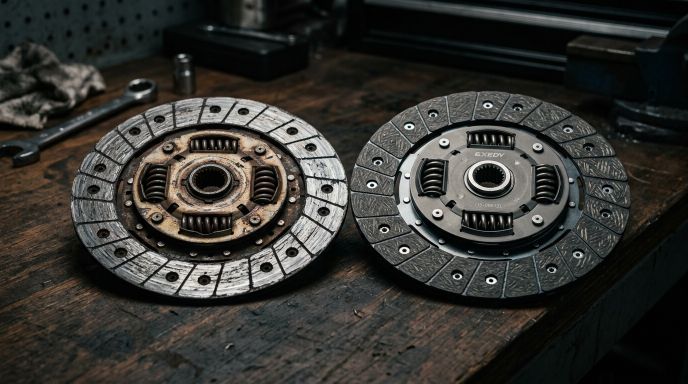
If you drive a manual transmission vehicle, your clutch is one of the hardest-working components in your car. Every gear change, every hill start, and every stop in traffic puts wear on your clutch disc. It’s a consumable part, just like your brake pads, but because it’s hidden inside the bell housing, it’s easy to forget about.
Most drivers have no idea their clutch is on its way out until they’re stuck at a traffic light with a pedal that goes to the floor — or worse, a car that won’t move at all. Understanding how long a clutch lasts — and spotting the early warning signs of failure — can save you from a breakdown, an expensive emergency repair, and potentially dangerous driving conditions.
In this guide, we’ll walk you through realistic clutch lifespan expectations by vehicle type, the factors that affect how quickly your clutch wears out, and the 7 warning signs you should never ignore. Whether you’re a daily commuter, a weekend track driver, or a diesel truck owner, this guide has the answers you need.
How Long Does a Clutch Last?
The lifespan of a clutch varies enormously based on what you drive, how you drive it, and how well the vehicle has been maintained. While a general rule of thumb is 60,000 miles, that average hides a huge variance. A careful highway driver might get 150,000 miles, while a learner driver in a hilly city might burn through one in 30,000.
| Vehicle Type | Average Lifespan | Key Factor |
|---|---|---|
| Standard Car / Daily Driver | 50,000 – 80,000 miles | City driving frequency, driver technique |
| Performance / Sporty Car | 20,000 – 40,000 miles | Aggressive shifts, higher engine torque |
| Diesel Truck (Heavy Duty) | 80,000 – 150,000 miles | Highway miles, load weight, quality parts |
| Motorcycle | 20,000 – 50,000 miles | Riding style, wet vs. dry clutch system |
| Classic / Vintage Vehicle | Varies (30k–100k+) | Part availability, driving frequency, storage |
What Affects Clutch Lifespan?
Several variables contribute to how fast your friction disc wears down. It’s rarely just one thing, but rather a combination of the following factors.
1. Driving Habits
This is the number one killer of clutches. Resting your foot on the clutch pedal while driving, known as “riding the clutch,” keeps the release bearing partially engaged and causes unnecessary slippage. Slipping the clutch excessively on hills to hold the car stationary or dumping the clutch at high RPMs from a standstill will drastically reduce its life.
2. Traffic Conditions
Where you drive matters just as much as how you drive. A car driven primarily in stop-and-go city traffic might engage and disengage the clutch hundreds of times in a single commute. Compare that to a highway vehicle that might stay in 5th or 6th gear for hours at a time; naturally, the city car will wear out its components much faster.
3. Vehicle Type and Engine Torque
The clutch relies on friction to hold the power of the engine. Vehicles with higher torque outputs require more clamping force to hold that power without slipping. Performance engines put immense stress on clutch components, meaning even perfectly driven sports cars will typically need replacements sooner than a low-powered economy hatchback.
4. Clutch Quality and Material
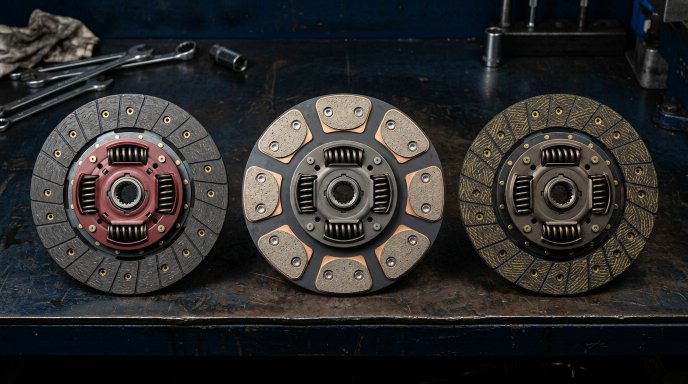
Not all clutches are built the same. An OEM-quality kit from a reputable manufacturer will generally outlast a cheap, unbranded replacement. Furthermore, the friction material itself plays a huge role; organic discs are smooth but wear faster under heat, while ceramic or Kevlar options offer different durability trade-offs.
5. Maintenance and Lubrication
The clutch system relies on hydraulics (or cables) to operate. If your slave or master cylinder is leaking, the clutch may not disengage fully, leading to dragging and accelerated wear. Keeping the hydraulic fluid clean and topped up is essential for longevity.
7 Warning Signs Your Clutch Is Failing
Your clutch will rarely fail without giving you a heads-up first. Here are the seven most common symptoms that indicate your clutch is reaching the end of its life.
1. The Clutch Is Slipping
This is the classic sign of a worn-out friction disc. You press the gas pedal and the engine revs rise, but the car doesn’t accelerate proportionally. It is often most noticeable when trying to accelerate in higher gears (4th or 5th) or when driving up a steep hill.
2. You Smell Burning
A sharp, acrid burning smell that resembles burnt toast or overheated brakes is a serious red flag. This smell is caused by the friction material on the clutch disc overheating and physically burning off.
3. Difficulty Getting Into Gear
If you encounter grinding or significant resistance when trying to shift gears, your clutch may not be disengaging completely. This could indicate that the pressure plate is failing or the disc is warped.
4. The Pedal Feels Soft or Spongy
If you press the pedal and it offers little resistance, feels “mushy,” or goes to the floor too easily, you likely have a problem. This usually points to a hydraulic issue, such as air in the lines or a leaking master/slave cylinder.
5. High Clutch Engagement Point
Pay attention to where in the pedal travel the clutch actually “bites” or engages. If it used to engage near the floor but now only catches near the very top of the pedal’s travel, your friction disc is likely very thin.
6. Grinding or Squealing Noise
A grinding sound when you press the clutch pedal down usually indicates a worn-out release bearing. A squealing sound that changes pitch as you engage the clutch can mean the pilot bearing is failing or the disc surface is glazed.
7. The Vehicle Lurches or Shudders
If your car shudders, vibrates, or jumps forward unevenly when you release the clutch pedal, the friction surface may be glazed or contaminated. A common culprit is an oil leak from the engine’s rear main seal dripping onto the clutch.
Clutch Lifespan by Driving Style
| Driving Style | Expected Clutch Life | Notes |
|---|---|---|
| Smooth Highway Commuter | 80,000 – 120,000 miles | Minimal wear, consistent engagement |
| City Stop-and-Go | 40,000 – 60,000 miles | High engagement frequency, heat build-up |
| Aggressive/Sporty Driving | 20,000 – 35,000 miles | Dumping clutch, hard launches, track use |
| Heavy Towing (Diesel Truck) | 60,000 – 120,000 miles | Depends on load, quality of kit, technique |
| Hill Driving (Regular) | 35,000 – 55,000 miles | Hill starts create slipping = accelerated wear |
Should You Replace Just the Disc or the Full Kit?
When facing a repair bill, many mechanics might offer — or DIYers might be tempted — to replace only the clutch disc to save money on parts. While technically true that the disc is the part that wears out, this is almost always a false economy.
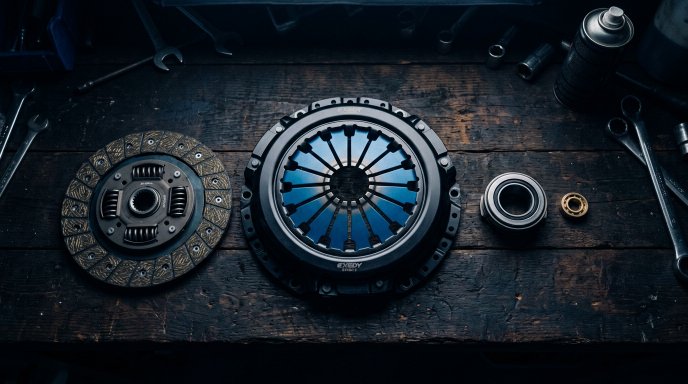
The pressure plate, throw-out bearing, and pilot bearing have all been subjected to the exact same mileage, heat cycles, and stress as the worn-out disc. The vast majority of the cost of a clutch job is labor. If your old release bearing fails 3 months after you replace the disc, you will have to pay for that same labor all over again. The smart money always replaces the full clutch kit.
Recommended Clutch Kits
Recommended Clutch Kits
LuK RepSet Clutch Kit
Complete OEM-quality kit. The gold standard for factory replacement on many European and domestic vehicles.
Exedy OEM Replacement Clutch Kit
Japanese-engineered precision. The go-to choice for Asian imports like Honda, Toyota, and Subaru.
ACT Heavy-Duty Clutch Kit
For performance and modified vehicles. Offers higher clamping force for tuned engines.
⚠️ Always verify compatibility with your vehicle before purchasing.
Common Mistakes That Kill Clutches Early
1. Riding the Clutch
Resting your foot on the clutch pedal, even lightly, partially engages the release mechanism. This causes the clutch disc to slip slightly against the flywheel, generating immense heat and wearing it out prematurely.
2. Using the Clutch to Hold on a Hill
Using the clutch bite point to hold your car stationary on an incline instead of using the handbrake is destructive. It forces the clutch to fight gravity and the engine simultaneously, burning through friction material in seconds.
3. Slipping the Clutch Excessively
Taking too long to fully release the pedal during gear changes creates unnecessary friction. Prolonged slipping during every shift adds up to thousands of miles of lost life.
4. Skipping the Break-In Period on a New Clutch
A new clutch needs time to “bed in” with the flywheel surface. Driving aggressively, towing, or launching hard for the first 500 miles can glaze the surface of a new disc, ruining its grip before it has even started its life.
When Should You See a Professional?
If you notice any of the 7 warning signs above — especially if the clutch is slipping or you smell burning — do not delay. A slipping clutch generates heat that can warp your flywheel, turning a simple kit replacement into a much more expensive repair that requires flywheel machining or replacement.
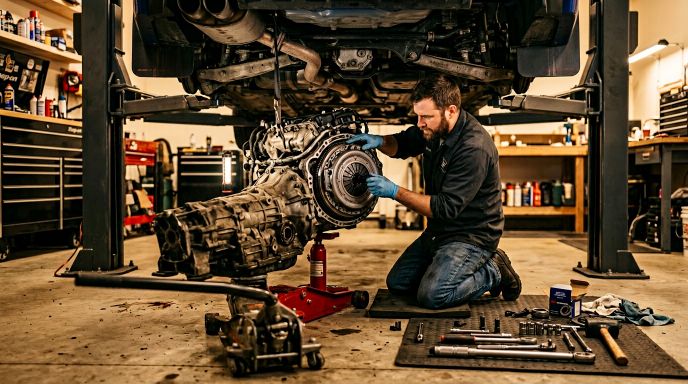
While replacing a clutch disc can be a DIY job for experienced home mechanics with the right tools, diagnosing hydraulic issues or dual-mass flywheel vibrations can be trickier. We recommend getting quotes from at least two local mechanics.
Frequently Asked Questions
Q: How long does a clutch last on a Honda Civic?
Civic clutches typically last 60,000–100,000 miles with normal driving. Sport or Si models often see more aggressive driving, which can reduce this to 30,000–60,000 miles. A full OEM-spec kit from Exedy or LuK is highly recommended.
Q: Can a clutch last 200,000 miles?
It is rare but absolutely possible, particularly in diesel trucks or vehicles driven exclusively on highways where shifting is infrequent.
Q: How much does clutch replacement cost?
Professional replacement typically costs between $500 and $1,200, with labor making up the majority. Doing it yourself with a quality kit can save you $300–$600 in labor costs.
Q: Does driving in traffic shorten clutch life?
Yes, significantly. Each stop-start engagement in city traffic creates friction and heat. A commuter in a major city will likely need to replace their clutch twice as often as a rural driver.
Q: Is it worth upgrading to a performance clutch?
For stock vehicles, an OEM-replacement kit is almost always the best value. Performance clutches are only beneficial if your engine has been modified to produce more torque.
Conclusion
While most clutches are designed to last between 50,000 and 100,000 miles, your driving habits have the final say. If you spot any of the warning signs — slipping, smells, or noise — act before you are left stranded. A timely replacement prevents damage to your flywheel and transmission, saving you money in the long run.
Remember that the cost of a clutch kit is a small fraction of the cost of a new transmission. Ignoring the signs can lead to much bigger repair bills down the road.