This site contains affiliate links. We may earn a commission if you purchase through our links at no extra cost to you. All opinions are our own. Learn more.
✅ Ceramic: Best for performance, track days, and high-torque engines
✅ Kevlar: Best for towing, diesel trucks, and maximum longevity
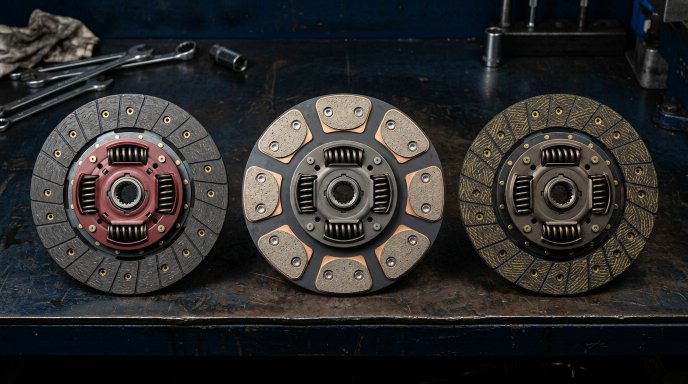
Walk into any performance parts store or search Amazon for a clutch disc, and you’ll quickly discover it’s not a simple “one size fits all” decision. Clutch plates come in three main friction material types — organic, ceramic, and Kevlar (aramid) — and each one is engineered for a very different type of driver.
Choosing the wrong material for your car and driving style is one of the most common (and costly) mistakes a clutch buyer can make. A ceramic clutch in a daily driver city car will chatter, grab aggressively, and make every slow-moving traffic experience miserable. A soft organic clutch in a heavily modified performance car will overheat and glaze within months.
In this guide, we break down every major clutch friction material — what it’s made of, how it performs, and exactly who it is right for.
The 3 Main Clutch Friction Materials
There are three materials that account for virtually all clutch plates sold in the consumer market today: organic (also called non-asbestos organic or NAO), ceramic (sometimes called cerametallic or “puck” style), and Kevlar (aramid fiber). Each has a distinct performance profile, price point, and ideal use case.
1. Organic Clutch Plates
What Are Organic Clutch Plates Made Of?
Modern organic clutch plates (also called NAO — Non-Asbestos Organic) are made from a composite mixture of rubber, carbon, glass fibers, metallic particles, and resin binders. Despite the name “organic,” there is nothing natural about the formula — it simply means the binding agent is non-asbestos. This material replaced asbestos-based compounds when health regulations were introduced in the 1980s.
Performance Characteristics
Organic friction material is the closest to the original factory setup in most vehicles. It offers a smooth, progressive engagement that gradually builds clutch transfer rather than engaging abruptly. This “controllable” feel is what makes it so popular for everyday drivers. Heat tolerance sits at approximately 300°C (572°F).
Best For
- Daily commuting and everyday use
- Learner drivers or those who prefer a forgiving clutch
- Unmodified OEM vehicles
- Classic and vintage cars
Pros and Cons
Pros: Smooth and progressive engagement, quiet operation, low flywheel wear, affordable and widely available, longest lifespan in standard driving conditions.
Cons: Lowest heat tolerance of the three materials, can glaze under aggressive use, not suitable for high-torque modified engines.
Top Organic Clutch Plate Brands
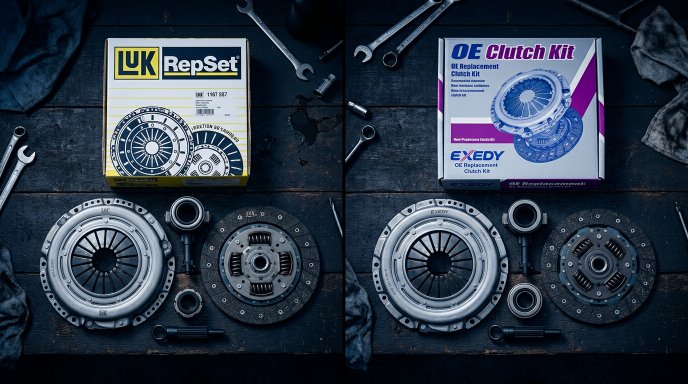
LuK, Exedy, Valeo.
2. Ceramic Clutch Plates
What Are Ceramic Clutch Plates Made Of?
Ceramic clutch plates (also known as cerametallic) are constructed from ceramic and copper or other metallic particles, typically pressed into a “puck” pattern around the friction disc rather than a full-face ring. The puck design reduces the contact area, which dramatically increases the pressure per square inch at each contact point — this is what gives ceramic clutches their characteristic high-grip, immediate engagement.
Performance Characteristics
Ceramic clutches are built for one thing: handling heat. With a heat tolerance of approximately 650°C (1,200°F), a well-made ceramic disc can handle repeated track launches, sustained high-RPM driving, and aggressive use that would cause an organic disc to fade or glaze completely. The trade-off is engagement feel. Ceramic clutches are notably more aggressive — the engagement tends to be more “on/off”.
Best For
- Track days and performance driving events
- Modified engines with significantly higher torque than stock
- Drag racing or sprint events
- Drivers who understand and accept the aggressive engagement trade-off
Pros and Cons
Pros: Massive heat tolerance, high grip and torque capacity, excellent for track use, resistant to fade under heavy use.
Cons: Very aggressive “on/off” engagement, causes clutch chatter in slow traffic, abrasive to flywheels (increases wear), noisy, shorter lifespan in daily street use.
Top Ceramic Clutch Plate Brands
ACT (Advanced Clutch Technology), Competition Clutch, SPEC Clutch.
3. Kevlar Clutch Plates
What Are Kevlar Clutch Plates Made Of?
Kevlar clutch plates use aramid fiber (the same material used in bulletproof vests) as the primary friction component. Aramid fiber is exceptionally strong, heat-resistant, and durable. Unlike ceramic pucks, Kevlar facings are typically full-face (like organic plates), which gives them a smooth engagement profile similar to organic material — but with significantly improved thermal and mechanical durability.
Performance Characteristics
Kevlar clutches occupy a unique middle ground in the market. They engage with the smooth progressiveness of an organic disc but with the extended heat tolerance and mechanical strength far beyond it. Heat tolerance is approximately 450°C (840°F). The key advantage of Kevlar is lifespan. Under normal driving conditions, a Kevlar-faced disc can last 70,000 to 120,000 miles.
Best For
- Diesel trucks with high torque
- Heavy-duty towing applications
- Drivers who want an organic-feel clutch that lasts significantly longer
- Vehicles operating in hilly terrain with frequent hill starts
Pros and Cons
Pros: Longest lifespan (up to 120,000 miles), smooth organic-like engagement, excellent for heavy towing and high torque, low flywheel wear.
Cons: Higher initial cost than organic, requires a longer break-in period (300–600 miles of careful driving), less widely available.
Top Kevlar Clutch Plate Brands
South Bend Clutch, Phoenix Friction.
Clutch Material Comparison Table
| Characteristic | Organic | Ceramic | Kevlar |
|---|---|---|---|
| Engagement Feel | Smooth / Progressive | Aggressive / On-Off | Smooth / Progressive |
| Heat Tolerance | ~300°C (572°F) | ~650°C (1,200°F) | ~450°C (840°F) |
| Typical Lifespan | 50,000–80,000 miles | 20,000–40,000 miles | 70,000–120,000 miles |
| Daily Driving Suitability | Excellent | Poor | Excellent |
| Track/Performance Use | Not Suitable | Excellent | Moderate |
| Flywheel Wear | Low | High / Abrasive | Low |
| Price Range | $30–$80 (disc) | $150–$300 (disc) | $100–$200 (disc) |
| Break-In Period | 200–500 miles | ~500 miles | 300–600 miles |
Which Clutch Material Should YOU Choose?
Daily Driver (Unmodified Car) → Organic
If you drive a standard, unmodified car to work every day, organic is your answer. It offers the smoothest engagement, is the most affordable, and is easily available for virtually every make and model.
Weekend Track Car or Modified Engine → Ceramic
If your car produces significantly more torque than stock, or if you attend track days and performance events, ceramic is the correct choice. Just be prepared for a different (more demanding) driving experience on the street.
Diesel Truck / Heavy Towing → Kevlar
For diesel truck owners who tow heavy loads regularly, Kevlar is the ideal material. The smooth engagement makes hitch hookups and loaded hill starts far easier to manage, and the dramatically extended lifespan offsets the higher cost.
Modified Street Car (Balanced Use) → Stage 2 Organic or Ceramic
For lightly modified daily drivers that occasionally see spirited use, a “Stage 2” organic disc (a heavier-duty organic compound designed for higher clamp loads) or a mild ceramic option from a brand like ACT can give you a balance of streetability and performance.
Classic or Vintage Vehicle → Organic or Kevlar
For classic cars, organic remains the first choice — it is gentle on old flywheel surfaces and provides the smooth engagement these gearboxes were designed for. Kevlar is an excellent alternative for classics that are regularly driven long distances.
Does Clutch Material Affect Installation or Break-In?
Yes, each material has slightly different break-in requirements. Respecting these periods is critical for the longevity of the clutch.
- Organic: 200–500 miles of progressive use. Avoid hard launches or heavy towing for the first 500 miles.
- Ceramic: Approximately 500 miles of careful use. Ceramic pucks need to “seat” against the flywheel surface. Expect some chatter.
- Kevlar: 300–600 miles of careful use. Aramid fibers need time to conform. Avoid towing during this period.
Our Recommended Picks by Material Type
Our Recommended Picks by Material Type
Best Organic: Exedy OEM Clutch Kit
The benchmark for OEM quality. Factory-engineered for smooth engagement and long life. Available for virtually every vehicle make and model.
Best Ceramic: ACT Extreme Duty Clutch Kit
ACT's Extreme Duty line uses a ceramic-metallic compound designed for modified street engines and track use. High clamping force with a range of disc options.
Best Kevlar: South Bend Clutch Stage 2 Daily Kit
The gold standard for diesel trucks (Cummins, Duramax, Powerstroke) and heavy towing. South Bend's Kevlar-lined discs offer smooth engagement and extended life.
⚠️ Always verify compatibility with your vehicle before purchasing.
Frequently Asked Questions
Q: Is ceramic clutch better than organic?
Not universally. Ceramic is better for high-performance and track use, but it is worse for daily driving. For a standard road car, organic is the better, more practical choice.
Q: How long does a Kevlar clutch last?
A Kevlar clutch typically lasts 70,000 to 120,000 miles under normal conditions. With careful use and proper break-in, some diesel truck owners report over 150,000 miles from a quality Kevlar kit.
Q: Can I use a ceramic clutch on a stock car?
Technically yes, but it is not recommended. A ceramic clutch will be harsh, grabby, and difficult to modulate in city traffic. It provides no benefit to a stock engine and will likely cause increased wear on your flywheel.
Q: Do ceramic clutches chatter?
Yes, especially during the break-in period and at low speeds in traffic. The puck-style contact design is inherently less smooth than full-face designs. Some chatter reduces with mileage, but some level of on/off engagement is a permanent characteristic of ceramic discs.
Q: What clutch material does the factory fit from OEM?
Almost universally, factory-installed clutches use organic (NAO) friction material. Organic provides the smooth, quiet, and forgiving engagement that suits the broadest range of drivers. Even high-performance factory sports cars come with organic clutches from the factory.
Conclusion
The right clutch material is a function of how you actually use your car — not how you wish you used it. Organic is the smart choice for the vast majority of drivers: it’s smooth, affordable, and long-lasting. Ceramic is a specialist tool for track drivers and highly modified cars. Kevlar sits in the middle, offering longevity and durability ideal for diesel trucks and high-mileage drivers.
Make your choice based on your real-world use case, and your clutch will serve you well for tens of thousands of miles.