This site contains affiliate links. We may earn a commission if you purchase through our links at no extra cost to you. All opinions are our own. Learn more.
When your clutch starts slipping or grinding, the first thing most people search is “do I just need a new clutch disc?” It’s a reasonable question — the disc is the part that actually wears out from friction. However, the clutch system is different. The answer comes down to labour cost logic, component lifespan, and risk.
In this guide, we’ll break down exactly what a clutch disc is, what a full clutch kit contains, and help you make the right purchasing decision before you (or your mechanic) pull the gearbox. Getting this wrong could mean paying for the same labour job twice within a year.
What Is a Clutch Disc?
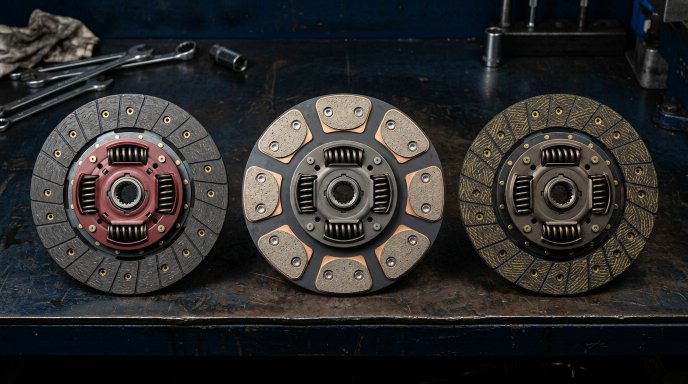
The clutch disc (often called the friction disc or clutch plate) is a circular metal disc with friction material bonded or riveted to both faces. It sits on the splines of the transmission input shaft, sandwiched between the engine’s flywheel and the pressure plate. When you take your foot off the pedal, the pressure plate clamps this disc against the flywheel, transferring power from the engine to the wheels. Over time, the heat and pressure of engagement wear this friction material down, just like brake pads wear down. A standalone clutch disc typically costs between $30 and $80 for OEM-spec replacements.
What Is a Clutch Kit?
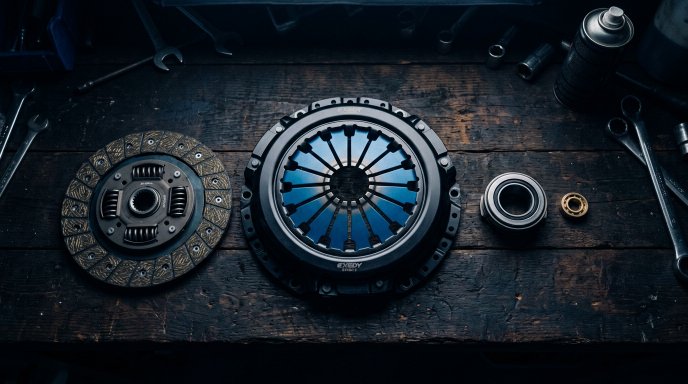
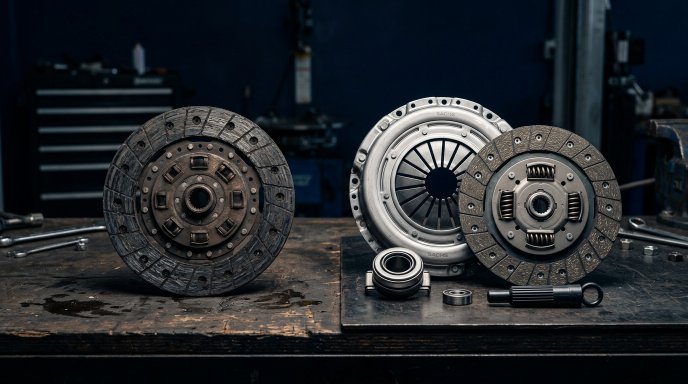
A clutch kit is a pre-packaged set containing all the major components of the clutch system that are designed to be replaced together. Manufacturers bundle these parts because they all live in the same harsh environment, experience the same heat cycles, and endure the same mileage. A typical clutch kit costs between $80 and $350 for standard vehicles, though performance applications can range from $500 to over $800.
The 5 Components of a Clutch Kit
| Component | Function | Typical Cost |
|---|---|---|
| Friction Disc (Clutch Disc) | Transfers drive from engine to transmission via friction | $30–$80 |
| Pressure Plate (Clutch Cover) | Clamps the friction disc against the flywheel | $60–$120 |
| Release Bearing (Throw-Out) | Disengages clutch when pedal is pressed | $20–$50 |
| Pilot Bearing / Pilot Bushing | Supports the transmission input shaft at the flywheel | $5–$15 |
| Clutch Alignment Tool | Centers the disc during installation | $8–$25 |
Clutch Disc vs Clutch Kit — Key Differences
| Factor | Clutch Disc Only | Full Clutch Kit |
|---|---|---|
| Cost of Parts | $30–$80 | $80–$350 |
| Labour Efficiency | Same labour cost as full kit | Covers all components for same cost |
| Component Coverage | Disc only — other parts remain old | All wear components replaced together |
| Risk of Comeback Repair | High — old bearing may fail within months | Low — all new components installed |
| Recommended For | Emergency/budget situation ONLY | All standard replacement scenarios |
When Should You Replace Just the Disc?
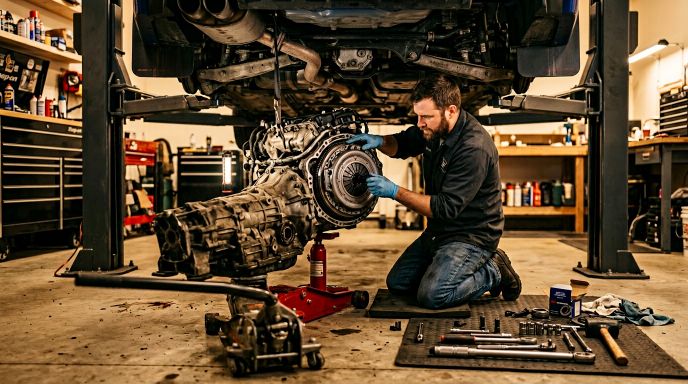
To be completely honest, there are almost no scenarios where replacing just the disc makes financial or mechanical sense. The labour required to remove a gearbox is typically 3 to 6 hours. The only valid case is if a brand-new clutch kit was recently installed (within 10,000 miles) and the disc was ruined by an external factor — such as a rear main seal oil leak.
In this rare case, the pressure plate and bearings are likely still in “new” condition. Even then, many mechanics would advise a full kit just to guarantee the repair warranty.
When Should You Buy the Full Kit?
We recommend always buying the full clutch kit. The reasoning is straightforward:
- Unified Wear: All components have aged together. If the disc is worn out, the pressure plate springs are likely tired too.
- Matched Engineering: Kits from reputable brands like LuK and Exedy are engineered as matched sets, ensuring the clamp load of the plate matches the friction material of the disc.
- Cost vs. Risk: The price difference between a disc ($50) and a kit ($150) is $100. The cost of removing the transmission a second time is $500+. It’s cheap insurance.
- Warranty: Most manufacturers only offer warranties on complete kits installed properly with a resurfaced flywheel.
What’s Actually Inside a Clutch Kit? (Explained)
The Friction Disc
Contains the friction material (organic, ceramic, or Kevlar) and features torsional damper springs. These springs absorb the shock of engagement, smoothing out power pulses from the engine before they hit the gearbox.
The Pressure Plate
A heavy metal cover containing a strong diaphragm spring. It bolts to the flywheel and spins with the engine. When you press the pedal, the spring releases the clamp; when you let go, it bites down.
The Release / Throw-Out Bearing
Rides on the transmission shaft. When you press the clutch pedal, a fork pushes this bearing against the spinning pressure plate fingers. In modern cars, this bearing is in near-constant contact and often begins to rattle before the disc itself wears out.
The Pilot Bearing (or Bushing)
A small bearing that sits in the center of the flywheel/crankshaft flange. It supports the tip of the transmission input shaft. Cheap but completely inaccessible without removing the gearbox — always replace it.
The Alignment Tool
A plastic spline tool included in most kits. It holds the clutch disc perfectly centered under the pressure plate while you bolt it down — without it, you cannot slide the transmission input shaft through the disc.
Our Top Clutch Kit Picks
Our Top Clutch Kit Picks
LuK 07-225 RepSet Clutch Kit
OEM supplier for many European and Asian vehicles. Includes the friction disc, pressure plate, and release bearing — all engineered as matched components.
Exedy OEM Replacement Clutch Kit
Standard fitment for most Japanese vehicles. Exedy is the original equipment supplier for Honda, Toyota, Mazda, and Subaru.
ACT HD/Race Clutch Kit
For performance or modified vehicles. Higher clamp load than OEM, with a choice of street or race disc compounds.
⚠️ Always verify compatibility with your vehicle before purchasing.
Frequently Asked Questions
Q: Is a clutch disc the same as a clutch plate?
Yes, in standard automotive use these terms are interchangeable. Both refer to the friction disc that sits between the flywheel and pressure plate.
Q: What happens if I only replace the disc and not the full kit?
You risk the other components (especially the release bearing) failing within months, forcing you to pay the same expensive labor bill all over again.
Q: How much does a clutch kit cost installed?
Expect to pay between $500 and $1,200 in total for a professional clutch kit installation, with labor accounting for the majority.
Q: Can I install a clutch kit myself?
Yes, if you have experience with mechanical repairs, access to a vehicle lift or quality floor jack and stands, and the alignment tool included in the kit.
Q: Does it matter which brand of clutch kit I buy?
Yes, significantly. Stick to well-known OEM suppliers: LuK, Exedy, Valeo, and Aisin are the top recommendations for standard vehicles.
Conclusion
The debate between a clutch disc and a full clutch kit is settled by one simple fact: the labor cost. Since getting to the clutch requires removing the transmission — one of the biggest jobs on a manual car — always change everything while you’re in there. The full kit is cheap insurance against an expensive comeback repair.